
A digital arena stadium built for fans, collectors and creators | Designed to celebrate passion, creativity, collaboration, and community-building! | Read it. Live it. Collect it!
TCR Arena Logo
They Didn’t Care What UFC Said”: How Khabib & Daniel Cormier Built MMA’s Most Dominant Gym

They Didn’t Care What UFC Said”: How Khabib & Daniel Cormier Built MMA’s Most Dominant Gym

January 11, 2025 | Sports

When talking about the greatest training gyms in mixed martial arts history, few names carry as much weight as the American Kickboxing Academy (AKA)—and according to those who were there, its dominance wasn’t accidental. In a recent interview, AKA veteran and former UFC contender Josh Thompson revealed what truly set the gym apart during its heyday: an unbreakable sense of unity and loyalty, even in the face of pressure from the world’s biggest MMA promotion. A Historic MMA Dynasty Under the guidance of head coach Javier Mendez, AKA established itself as a powerhouse in MMA by consistently producing elite fighters who reached the pinnacle of the sport. Fighters like Khabib Nurmagomedov, Daniel Cormier, Cain Velasquez, Islam Makhachev, and others all passed through its doors—contributing to a remarkable 19 fighters who became champions or elite contenders in MMA, second only to American Top Team in numbers. Two‑division UFC champion Daniel Cormier, himself an AKA product, once reflected on that era as something that “will never be replicated again in the sport of mixed martial arts.” But what exactly made that gym so special? Unspoken Rules: Loyalty Over Promotion Demands According to Thompson, AKA’s legacy was built on one simple but powerful philosophy: teammates would not fight each other unless necessary. “Even to this day,” Thompson said, “our guys decided not to fight each other. They didn’t care what the UFC said.” That meant when the UFC tried to line up fights between AKA teammates—such as Josh Koscheck vs. Jon Fitch—fighters and coaches pushed back hard. In some cases, this stance even jeopardized fighters’ careers, but the gym never wavered from its internal code. Thompson explained that this loyalty extended across weight classes and eras, making it possible for fighters like Khabib Nurmagomedov and Islam Makhachev to train and rise together without ever having to clash inside the Octagon. Unity in Action: Why AKA Was Unique In a sport where allegiances often end at the cage door, AKA’s approach was different. Fighters trained together, grew together, and protected one another’s careers. For example: Daniel Cormier moved up to light heavyweight instead of fighting a teammate champ, Cain Velasquez—a decision rooted in respect and strategic unity. When Thompson prepared for his iconic fight against Nate Diaz—where he scored Diaz’s first career knockout—he trained alongside Khabib and Islam, tapping into their elite grappling and pressure styles. This culture of cooperation—rather than competition between teammates—created a training environment where fighters were sharpened by their peers rather than worn down by internal rivalries. AKA’s Legacy in MMA Today, AKA is remembered not just for its championship pedigree but for a team ethos rarely seen in professional sports. The gym produced some of the most dominant fighters in UFC history—most notably Khabib Nurmagomedov, who retired with a perfect 29‑0 record and is widely regarded as one of the greatest lightweights of all time. Even longtime teammates like Cormier continued to praise the gym’s impact long after leaving their prime. Reflecting on the era, he acknowledged that such a collective dominance and camaraderie may never be seen again in MMA. Why This Story Matters This isn’t just nostalgia—it’s a look at how culture and cohesion can elevate athletes beyond individual potential. In an era where promotions, contracts, and media narratives often divide fighters, AKA’s example shows a different path: one where loyalty and shared purpose fueled a dynasty that changed MMA forever
Read More
Arsenal Handed Huge Title Boost as Man City and Aston Villa Drop Points

Arsenal Handed Huge Title Boost as Man City and Aston Villa Drop Points

January 9, 2025 | Sports

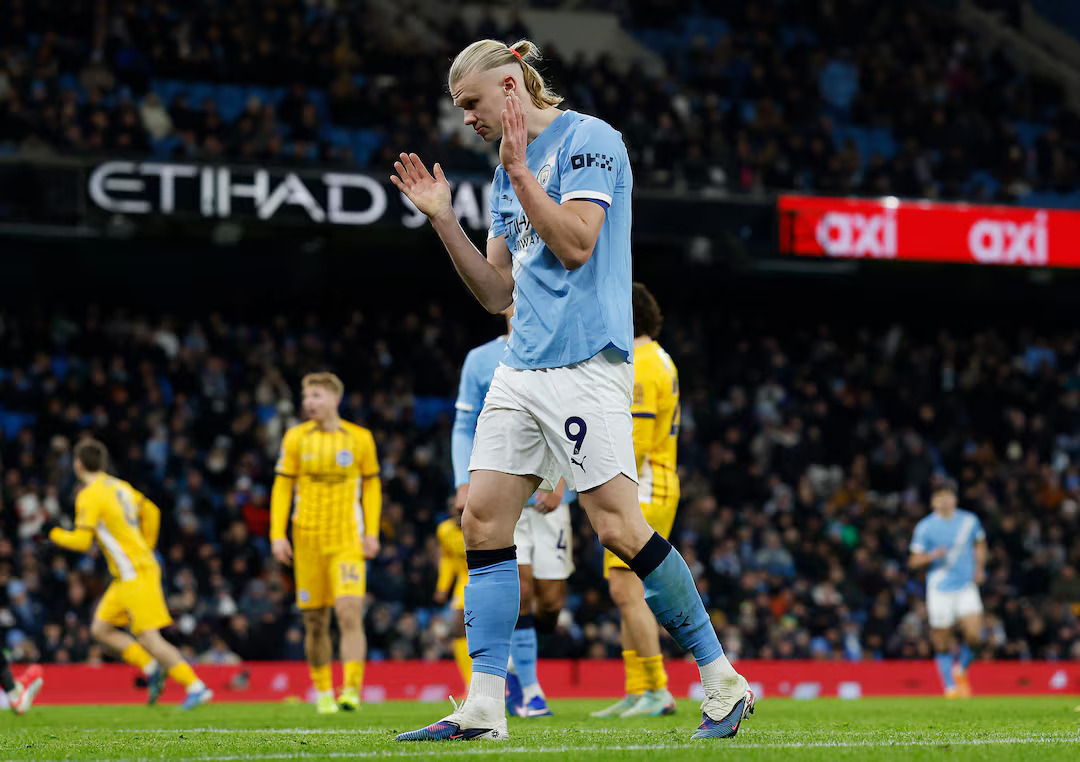
London, England—Arsenal have received a significant boost in the Premier League title race without even taking the field, as both Manchester City and Aston Villa dropped points on Wednesday—reinforcing the Gunners’ position at the top of the table. City and Villa Slip Up Manchester City drew 1–1 with Brighton & Hove Albion, despite Erling Haaland scoring his 150th goal for the club from the penalty spot. Kaoru Mitoma equalized for Brighton, securing a share of the points for the visitors. The result marked City’s third consecutive draw, further denting their momentum in the title chase. Aston Villa were held to a 0–0 draw by Crystal Palace, leaving them unable to close the gap on Arsenal. After these results, both City and Villa remain five points behind Arsenal. If Arsenal can secure a win over Liverpool in their next fixture, they could extend their lead to eight points at the summit of the Premier League. Arsenal Miss Opportunity to Capitalise However, Arsenal were unable to take full advantage of their rivals’ dropped points in their own recent match. The Gunners were held to a 0–0 draw by Liverpool at the Emirates Stadium in a lackluster encounter, meaning they remain six points clear at the top. Despite dominating possession and creating chances, Arsenal failed to convert—and only registered a shot on target late in injury time. The stalemate leaves them with a gap over their Premier League challengers, but not as large as it might have been. Title Race Context Arsenal’s position at the top of the Premier League table has been strengthened by recent draws for both Manchester City and Aston Villa. City’s inability to turn their chances into wins, coupled with Villa’s inability to secure victory at Selhurst Park, gives the Gunners breathing room in what has become a tightly contested title race. Manchester City has dominated the English top flight for much of the last decade, but their recent streak of dropped points raises questions about their title credentials this season. Meanwhile, Villa’s challenge has faltered at key moments, keeping Arsenal in clear control at the summit—even if Arsenal’s own recent draw shows they cannot rest on their lead. What’s Next Arsenal will be hoping to build on their position with another crucial match — next up against Liverpool, where a win could significantly increase their lead. Manchester City continue to chase but must find a way to convert draws into wins if they hope to overhaul the Gunners. Aston Villa, while still in the hunt, must string together victories to remain genuine title contenders. As the season progresses, every dropped point by Arsenal’s rivals strengthens their bid for a first Premier League title since 2004—a long-awaited triumph that fans will be desperate to see materialize.

Read More
Chelsea Appoints Liam Rosenior as New Head Coach—Full Story

Chelsea Appoints Liam Rosenior as New Head Coach—Full Story

January 9, 2025 | Sports

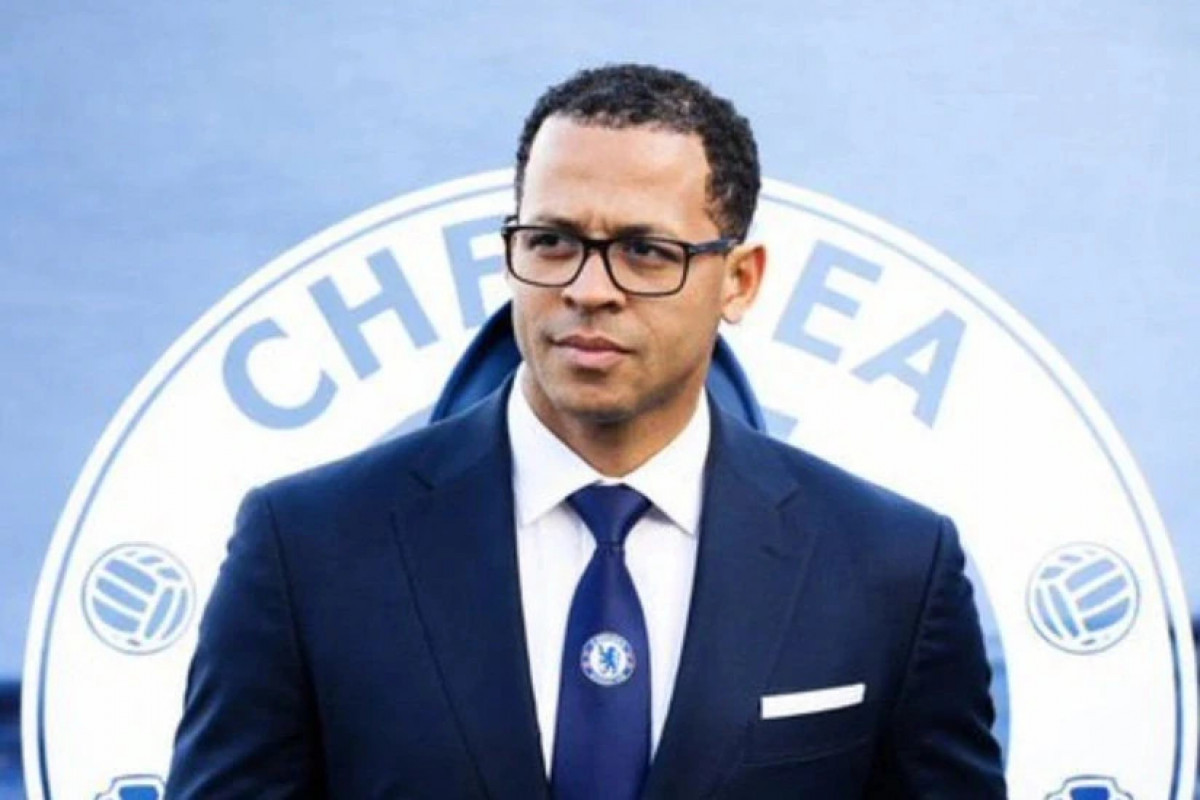
London, England—Chelsea Football Club has confirmed the appointment of Liam Rosenior as the club’s new head coach, marking a major managerial change at Stamford Bridge. The 41-year-old English coach joins the Blues with a long-term vision and a deal running until 2032 as he succeeds Enzo Maresca, who left the club earlier this month. Rosenior’s Arrival at Chelsea Chelsea officially announced Rosenior’s appointment earlier this week, welcoming him as the head coach of the men’s first team. The club’s statement highlighted its excitement about the future and Rosenior’s fresh approach as a leader. Rosenior comes to Chelsea from RC Strasbourg in France’s Ligue 1, a club also part of the BlueCo ownership group, which also owns Chelsea. During his time in Strasbourg, he helped guide the team to a strong league position and European qualification—achievements that raised his profile and made him a standout managerial candidate. Contract and First Matches The new head coach signed a six-plus-year contract that extends until 2032, signalling the club’s long-term belief in his project and ideas. Rosenior observed Chelsea’s recent Premier League fixture against Fulham from the stands, with his official managerial debut set for the upcoming FA Cup third-round match against Charlton Athletic. Rosenior Speaks In his first public remarks since his appointment, Rosenior expressed his pride and gratitude at joining one of England’s most famous clubs. He spoke about the unique spirit and history of Chelsea and his commitment to building a team that reflects these values on the pitch. Backroom Team Changes Rosenior has also reshaped his coaching staff at Chelsea, bringing in several trusted assistants from Strasbourg: Kalifa Cissé and Justin Walker as first-team coaches Ben Warner as first-team analyst Calum McFarlane, formerly Under-21 head coach, joins the first-team coaching ranks Ben Roberts continues as goalkeeper coach Bernardo Cueva remains set-piece coach These appointments aim to ensure continuity while establishing Rosenior’s tactical and training philosophies. What This Means for Chelsea Rosenior’s appointment comes at a critical point in Chelsea’s season. The club currently sits outside the Premier League’s top four and is involved in several competitions, including domestic cups. The decision to hand a lengthy contract to a relatively young coach—one without prior Premier League experience—signals Chelsea’s belief in a longer-term rebuild and a fresh footballing direction under his leadership. In summary: Liam Rosenior’s arrival marks a new chapter at Chelsea, blending fresh managerial ideas with a long-term plan. Fans and pundits alike will be watching closely as he prepares to take charge and begin his tenure at one of English football’s most historic clubs.

Read More
Global Collectibles Market Forecast to Grow at 6.2% CAGR Over the Next Decade

Global Collectibles Market Forecast to Grow at 6.2% CAGR Over the Next Decade

January 8, 2025 | Sports

The global collectibles market — encompassing sports memorabilia, trading cards, coins, stamps, toys, figurines and other niche collectible categories — is on course for significant long-term growth, according to the latest Market Decipher industry report. Market Size & Future Growth Forecast Market Decipher’s “Collectibles Industry Report 2025-2034” highlights that the global collectibles market is expected to reach approximately $512 billion in 2025 and continue expanding steadily through the next decade at a compound annual growth rate (CAGR) of around 6.2%. This growth is being driven by rising consumer interest, vibrant trading activity, and the increasing role of online platforms in facilitating buying and selling. This broad market includes traditional and modern collectible segments, such as Coins & currency collectibles Stamps and philately Sports memorabilia Trading cards and TCG cards Toys and action figures Consumer goods and pop culture collectibles Figurines and high-end art pieces Key Drivers of Growth Nostalgia & Pop Culture Demand Collectors are increasingly drawn to items with emotional value and nostalgia, such as vintage toys, iconic trading cards, and rare stamps tied to cultural milestones. These goods often transcend pure hobbyist interest and become investment assets, making them appealing to both seasoned collectors and newer, younger audiences. Digital Platforms & Market Accessibility The rapid expansion of online marketplaces like eBay, specialized collectible platforms, and mobile resale apps has lowered barriers to entry for collectors worldwide. Digital advancements have made it easier than ever for buyers and sellers to authenticate, list, and trade collectibles—contributing to broader market participation. Authentication & Blockchain Innovation Emerging technologies such as blockchain authentication and digital tracking are enhancing credibility in collectible transactions, helping reduce counterfeit risk and building trust among collectors and investors alike. Segment Highlights Coins & Currency: Rare and historical coins continue to attract significant demand, with collectors focusing on graded and limited-edition coins. Stamps (Philately): Digital authentication has revitalized interest in stamp collecting, particularly 19th-century postal issues and thematic collections. Trading Cards & TCG: Trading cards—including sports and trading card games (TCG) such as Pokémon — are among the fastest-growing sectors. Digital and physical card intersections are boosting overall value. Sports Memorabilia: Autographed jerseys, game-used equipment, and iconic collectibles tied to popular athletes are commanding high auction prices, thanks to nostalgia and fan engagement. Toys & Figurines: Demand for vintage and limited-edition toys from major franchises (e.g., action figures, range-exclusive releases) remains robust. Consumer Goods & Pop Culture: Licensed merchandise from global brands such as Disney and Marvel is emerging as a strong collector category propelled by brand loyalty and limited releases. Market Outlook & Competitive Landscape The collectibles market is evolving into a highly competitive industry featuring diversified participants, from auction houses and grading services to specialized marketplaces and major brand licensors. Innovation and strategic investments—such as digital authentication solutions and mobile commerce tools—are shaping how the sector will grow over the next decade. In addition to Market Decipher’s forecast, other independent research suggests that the global collectibles market could reach hundreds of billions of dollars in value over the next decade, with steady growth underpinned by digital engagement and expanding collector demographics worldwide. Why This Matters The collectibles industry is no longer a niche hobby space; it has become a vibrant cultural investment market with broad appeal across age groups and geographic regions. Whether driven by nostalgia, financial value appreciation, or community engagement, the market’s long-term trajectory points toward sustained expansion and innovation.

Read More
FIFA World Cup 2026 Explained: Hosts, 48 Teams, Match Schedule, Format & Key Details

FIFA World Cup 2026 Explained: Hosts, 48 Teams, Match Schedule, Format & Key Details

January 8, 2025 | Sports

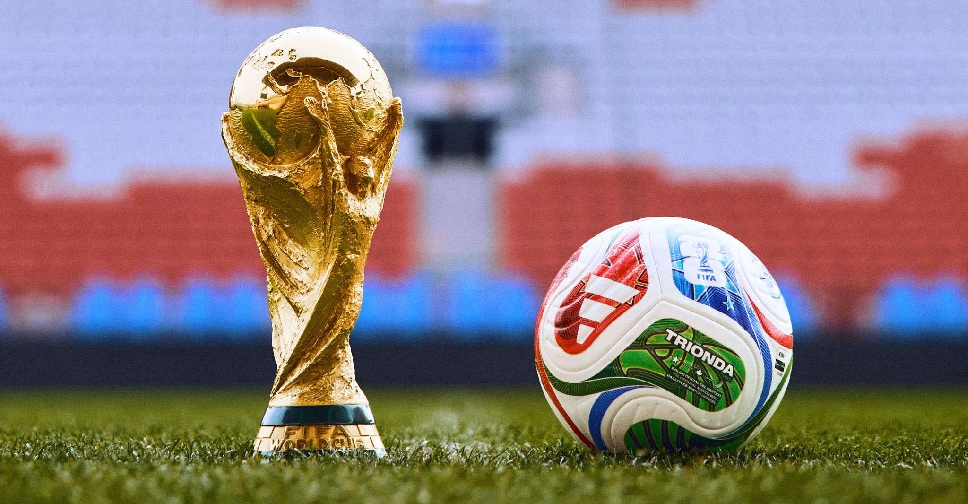
The 2026 FIFA World Cup is shaping up to be the biggest and most ambitious edition in the history of football’s flagship tournament—with an expanded format, three host countries, and record-breaking participation. Hosts & Historic Format The 2026 FIFA World Cup will be co-hosted by the United States, Mexico, and Canada, marking the first time three nations have jointly hosted the competition. The tournament will be staged across 16 world-class cities across North America. This edition will also be the largest in World Cup history, with 48 national teams competing, up from 32 in previous tournaments. A total of 104 matches will be played over the course of the competition—compared to just 64 matches in past editions. Tournament Dates & Key Matches Opening Match: June 11, 2026—The opening game takes place at the iconic Estadio Azteca in Mexico City, making it one of the few stadiums to host World Cup matches across three different decades. Final: July 19, 2026—The final will be held at MetLife Stadium in East Rutherford, New Jersey (referred to for the tournament as New York New Jersey Stadium). under FIFA naming rules. Length of Tournament: 39 days of intense football action—longer than any previous World Cup. Tournament Format Explained The expanded 48-team format will work as follows: Group Stage: Teams are split into 12 groups of four teams. – Each team plays three group matches. Advancement to Knockouts: – The top two teams from each group automatically advance. – Additionally, the eight best third-placed teams also qualify for the next round. Knockout Phase: – The Round of 32 marks the first elimination stage, followed by the Round of 16, Quarter-finals, Semi-finals, Third-place match, and Final. This structure ensures a total of 104 matches across the group and knockout stages. 16 Host Cities & Venues Matches will be played across Canada, Mexico, and the United States, with the U.S. hosting the majority of fixtures. United States (11 host cities): New York/New Jersey (Final), Los Angeles, Miami, Dallas, Atlanta, Houston, Philadelphia, Seattle, San Francisco, Boston, and Kansas City. Mexico (3 host cities): Mexico City (Opening Match), Guadalajara, and Monterrey. Canada (2 host cities): Toronto, Vancouver. Key Venue Highlights Estadio Azteca, Mexico City — historic stadium hosting the opening match and famous for its World Cup legacy. MetLife Stadium, New Jersey—hosts the 2026 final, with rebranding for FIFA use as New York New Jersey Stadium. Qualified Teams & Draw Qualification for the World Cup 2026 is ongoing, with many teams already securing their places. The final tournament draw took place on December 5, 2025, in Washington, D.C., laying out the full group stage paths for all competing nations. Notable qualified teams include traditional powerhouses and emerging nations, with several spots still to be decided via playoffs in early 2026. What Makes World Cup 2026 Special? The largest World Cup ever, with 48 teams and 104 matches. Three host countries—the USA, Mexico, and Canada—share the global spotlight Historic venues like Estadio Azteca are returning to center stage. MetLife Stadium hosts the final—adding another major football milestone. Advanced scheduling tools, such as the official World Cup Schedule Navigator, help fans easily explore fixtures. The 2026 FIFA World Cup promises unforgettable moments—from thrilling group stage battles to a dramatic final on July 19—and continues to grow football’s global reach like never before.

Read More
Manchester United Part Ways with Ruben Amorim After Europa League Final Run

Manchester United Part Ways with Ruben Amorim After Europa League Final Run

January 8, 2025 | Sports

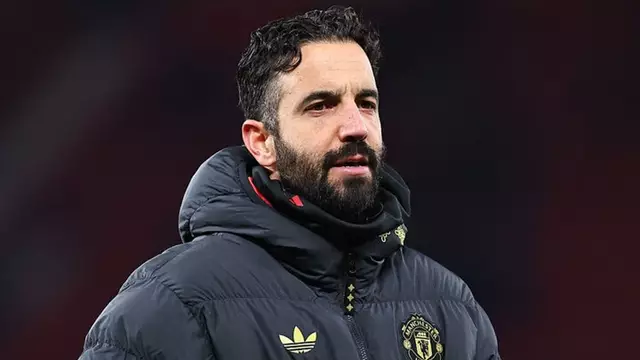
Manchester United have announced the sacking of head coach Rúben Amorim, bringing an end to his turbulent 14-month spell at Old Trafford. The decision was confirmed on January 5, 2026, with the club citing a need for change as United sit sixth in the Premier League and pursue a stronger push for European qualification. Amorim’s Short, Difficult Reign Amorim was appointed in November 2024, taking over from interim management following Erik ten Hag’s exit. The 40-year-old Portuguese coach oversaw 63 games in charge, winning 24 (or 25), drawing 18, and losing 21, leaving him with one of the lowest win percentages of any Manchester United manager in Premier League history. Despite reaching the UEFA Europa League Final in Bilbao—where United were beaten 1–0 by Tottenham Hotspur—his tenure will be remembered for inconsistent league form and some deeply disappointing results. Under Amorim, United recorded their worst top-flight finish in decades (15th place) in the 2024–25 season and missed out on European competition this season before the dismissal. The Portuguese boss also made headlines with public criticism of the club’s hierarchy following a draw with Leeds United, remarking that he wanted to be “manager, not just the coach”—comments that reportedly strained relations behind the scenes. Interim Shake-Up: Darren Fletcher Steps In Following the sacking, club legend and under-18s coach Darren Fletcher has been named interim head coach. Fletcher will take charge of the Premier League clash at Burnley and is expected to remain in the role through the FA Cup third round vs. Brighton & Hove Albion. Speaking ahead of his interim debut, Fletcher said managing United was a “surreal and amazing honor,” stressing his focus is fully on the Burnley fixture. In his first match in charge, United played out a 2-2 draw at Burnley, showing attacking promise but conceding late despite dominating large stages of the game. United are also reportedly exploring additional interim options, including former club players like Michael Carrick and Ole Gunnar Solskjær, while assessing permanent managerial candidates for the summer. Reaction & What’s Next The decision has prompted reaction both inside and outside the club. Former United defender Gary Neville urged the club to stop experimenting with managers and focus on appointing someone aligned with United’s traditional attacking identity. Off the pitch, reports suggest that United may owe Amorim substantial compensation due to the remaining contract years, adding a financial dimension to the decision. As United look ahead, the managerial search will be one of the biggest talking points of the season, with several high-profile names reportedly being considered. Summary of Key Facts Amorim Tenure: Nov 2024 – Jan 2026 (14 months) Europa League Final: Lost to Tottenham (Bilbao) League Position at Departure: 6th in Premier League Interim Manager: Darren Fletcher Future Search: Permanent manager likely post-season

Read More