Kevin O’Leary—the Canadian businessman, television personality, and “Mr. Wonderful” from Shark Tank—has become one of the most discussed figures in the booming world of sports collectibles. What started as a casual interest has snowballed into a portfolio worth well over $100 million, marked by one of the most iconic memorabilia purchases in history.
A Record-Setting Card: Michael Jordan & Kobe Bryant Dual Logoman
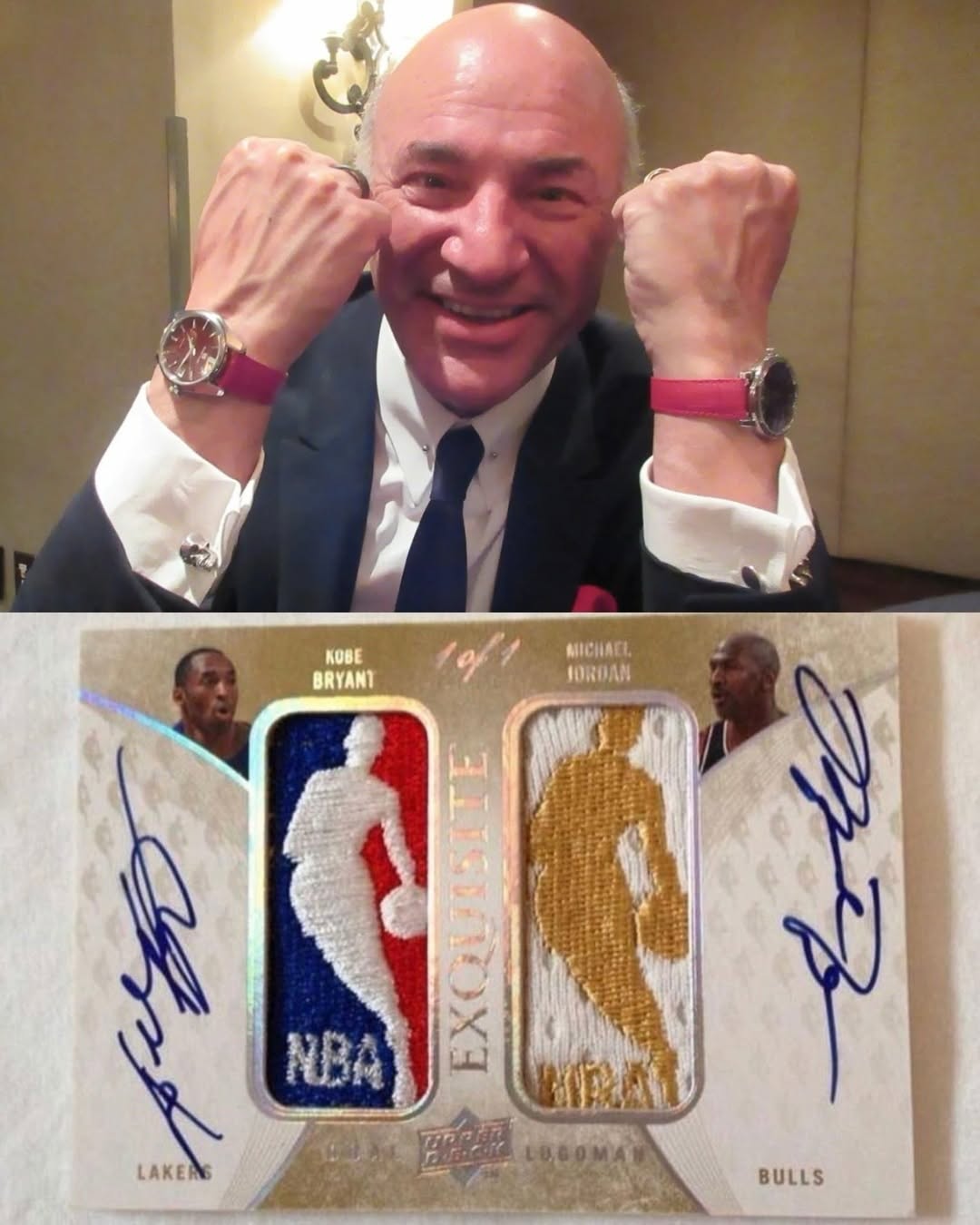
In August 2025, a rare trading card featuring Michael Jordan and Kobe Bryant smashed auction records when it fetched $12.932 million at Heritage Auctions. This 1-of-1 2007–08 Upper Deck Exquisite Collection Dual Logoman Autograph card carries signatures from both NBA legends, along with actual NBA logo patches cut from game-worn jerseys—making it the most expensive sports card ever sold.
O’Leary later confirmed that he purchased the card not alone but as part of a syndicate with fellow collectors Matt “Shyne150” Allen and Paul Warshaw.
From Skeptic to Serious Collector
Once skeptical about the value of sports cards, O’Leary’s thinking shifted dramatically as he observed both market performance and cultural trends. In interviews and public appearances, he has described high-end trading cards as “cultural artifacts” and alternative assets—likening them to fine art, watches, and other rare collectibles that can appreciate over time.
O’Leary has discussed using historical sales data and broader market growth to justify trading cards as part of a diversified investment approach, viewing these collectibles similarly to more traditional asset allocations like gold or cryptocurrency.
A Massive Portfolio
According to collectible industry reports, O’Leary has been quietly building a “massive portfolio” of rare sports cards over the past few years, with many individual pieces valued between roughly $600,000 and $1.7 million.
While he hasn’t publicly disclosed every card in his collection, bitcoin-style analogies and strategic plans to index these assets hint at a long-term vision for both cultural relevance and financial return.
Why O’Leary Thinks Cards Matter
O’Leary has said that these collectibles represent more than just cardboard — they celebrate entrepreneurship, sports excellence, and family connections, resonating far beyond the hobbyist community. His embrace of trading cards reflects a broader trend in which rare memorabilia is increasingly seen as institutional class assets, attracting investors and collectors alike.
For O’Leary, who needed no convincing on the value of entrepreneurship and risk-taking long before entering the card world, the move into collectibles signifies both a cultural belief and a strategic investment decision.